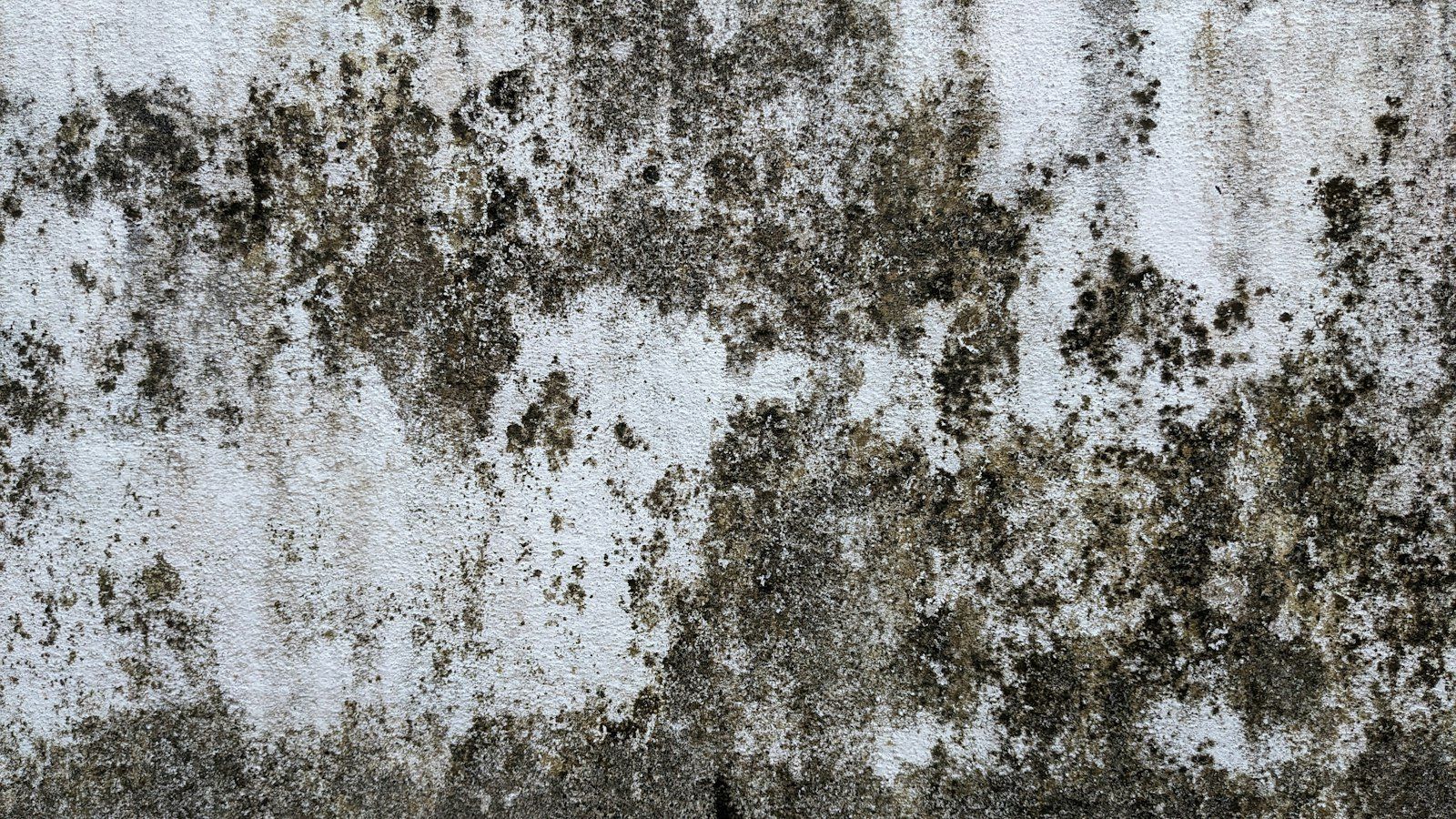
Why drying matters
Mold can start growing on wet drywall, wood and carpet pad within a day or two. Surfaces that feel dry can still hold enough moisture inside to feed it, which is why crews use meters instead of touch.
Structural drying means getting the framing, subfloor and wall cavities back to normal moisture levels. Surfaces dry first, so a room can look done days before the wood inside the walls is. That takes dehumidifiers, air movers and sometimes small holes in walls or cabinets so air can reach the wet spots.
When mold is already there
If a leak went unnoticed and mold has grown, the work changes:
- The area gets closed off with plastic sheeting and kept under negative air pressure so spores don't spread.
- Moldy drywall, insulation and pad come out.
- Framing gets cleaned and treated, then dried.
- The source of the moisture gets fixed, or the mold comes back.
Small spots, under about 10 square feet, are often fine to clean yourself. Larger areas, or mold inside walls or in a crawl space, are a job for a crew.
Before you dial, have these ready
- Where the water started, if you can tell: a supply line, the water heater, a toilet, a dishwasher, the creek, or rain getting in.
- Whether it is clean water, gray water from an appliance, or sewage.
- Which rooms and floors got wet, and about how long ago it started.
- Whether the water and the power to the wet rooms are off.
- Your neighborhood or nearest cross street, so the call goes to a crew that works your part of town.
Plan on a couple of minutes on the phone. That is usually enough to reach a local company and get a time for someone to come out.
The call is free. You don't have to hire anyone.
Mold in a wet climate
Western Washington's long, damp winters make mold more of a risk here than in drier parts of the country. With roughly 62 inches of rain a year in Issaquah, indoor air stays humid from fall through spring, and a wet spot that would dry on its own somewhere else can grow mold here.
The common trouble spots are crawl spaces with torn vapor barriers, daylight basements where the uphill wall stays damp, bathrooms with weak exhaust fans, and attics where a roof leak soaked the insulation. Tightly sealed newer homes in the Highlands and Talus can trap moisture inside if ventilation is not running.
The best defense after any leak is fast, thorough drying. If you had a leak recently and now notice a musty smell, stains spreading on drywall, or peeling paint near the floor, call and have the area checked with a moisture meter before you repaint or replace flooring.